News release
Puma Refines the Grog Gold Zone Potential
Discuss on
 $PUMA.V
Loading live prices…
Loading live prices…
Rimouski, Quebec--(Newsfile Corp. - November 17, 2026) - Puma Exploration Inc. (TSXV: PUMA) (OTCQB: PUMXF) ("Puma" or the "Company") is pleased to provide an update on its 2026 surface exploration program at the Grog Area of its McKenzie Gold Project in northern New Brunswick. Recent surface work has identified mineralization, alteration, and structural and geological features that support a new interpretation of the Grog Area and its potential to host an important gold system (Figure 1).
The main gold occurrences at Grog sit in the middle of a large, more than 12 km2, gold-arsenic-antimony-mercury-thallium (Au-As-Sb-Hg-Tl) soil anomaly. This geochemical signature supports the potential for a sediment-hosted disseminated Carlin-type gold deposit. These "invisible gold" deposits are among the world's largest hydrothermal gold deposits. While this interpretation is preliminary, it provides an additional exploration model to test against the structural controls and the gold mineralization identified by earlier operators and by Puma's ongoing work.
EXPLORATION HIGHLIGHTS
2026 trenching outlined a ~ 250 m by 40 m footprint of new targeted mineralization.
2026 grab samples returned gold grades of 3.20 g/t Au*, 1.28 g/t Au*, 0.69 g/t Au*, and 0.56 g/t Au* (Image 1). *The reader is cautioned that grab samples are selective by nature and may not represent the true metal content of the mineralized zone.
2026 grab samples returned significant silver, arsenic and antimony anomalies.
Grog 1, Grog 2, and Grog 3 provide multiple exploration targets across a roughly 4 km x 3.5 km area (Figure 1).
Previous Puma grab samples returned up to 9.21 g/t Au, 3.03 g/t Au and 2.19 g/t Au (see February 26, 2026, News Release).
Historical drilling by previous operators intersected 0.45 g/t Au over 31.05 m, 0.32 g/t Au over 42.25 m and 0.37 g/t Au over 13.00 m.
Gold-in-soil anomalies and the As-Sb-Hg-Tl pathfinder suite provide additional tools for target prioritization and for testing the depositional model.
"Grog is becoming impressive and is moving up as a priority exploration target area at McKenzie for Puma. We now have a substantial area within an altered greywacke sequence to evaluate. The presence of several gold occurrences and significant gold mineralization drilled historically provides a compelling case to examine this area further," said Rejean Gosselin, Chairman of Puma Exploration. "The potential of a large sediment-hosted disseminated Carlin-type gold deposit highlighted by gold and pathfinder geochemistry adds another important dimension to our targeting."
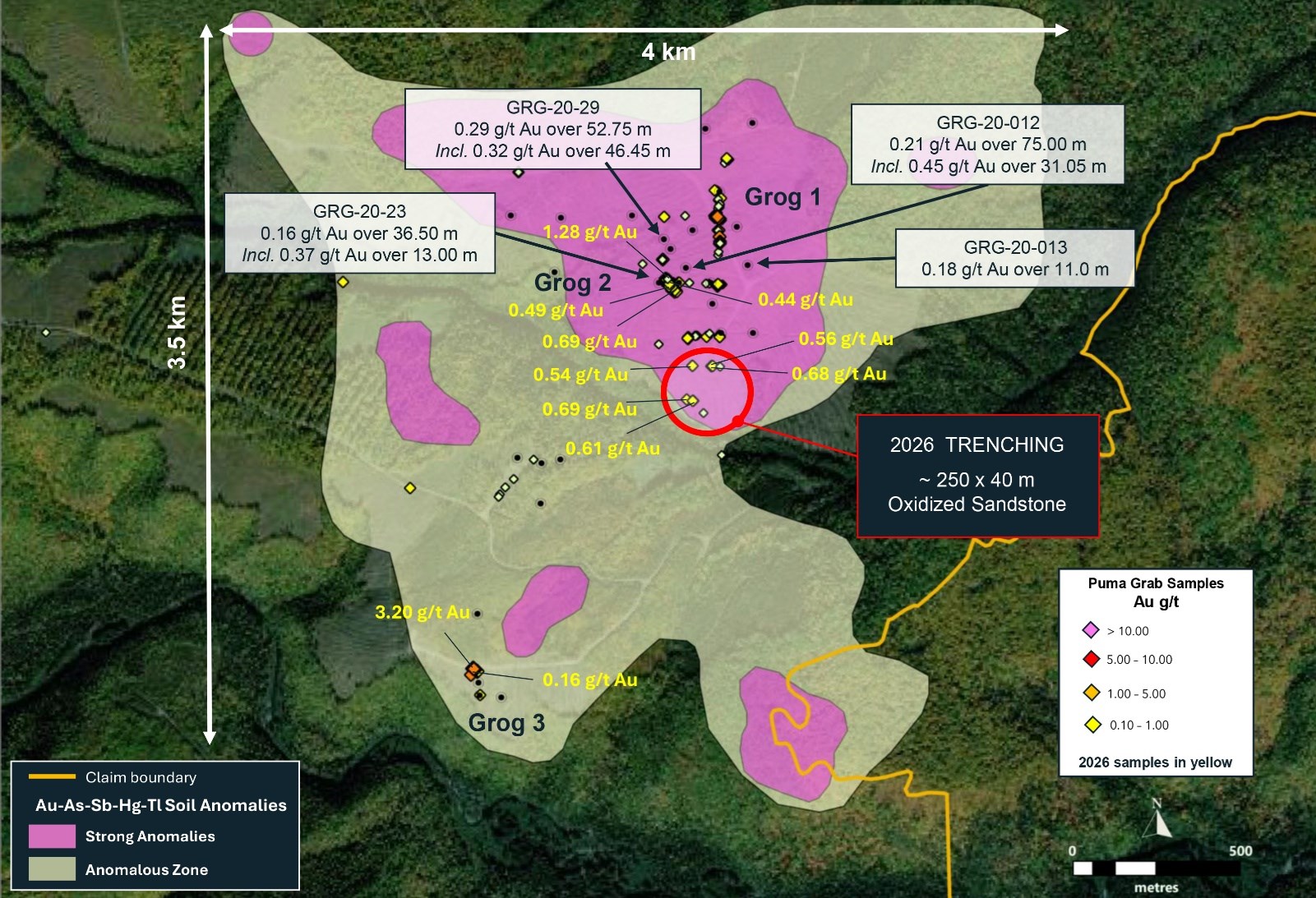
Figure 1. Mineralized footprint of the Grog Area.
To view an enhanced version of this graphic, please visit:
https://images.newsfilecorp.com/files/3398/324340_c5a0e26b34af9b74_001full.jpg
EXPANDING THE GROG EXPLORATION POTENTIAL
Puma's compilation identified three main gold occurrences at Grog (Grog 1, Grog 2, Grog 3). Previously reported surface results showed gold at multiple locations and provided the starting points for testing a broader mineralized system.
The latest discovery followed the trenching program announced on September 2, 2026. Earlier work at Grog linked mineralization to northwest-oriented late brittle faults and quartz veining. The new exposures add valuable surface information for evaluating how mineralization is distributed and how these structures relate to the broader gold and geochemical anomalies.
The ~250 m by 40 m area defines the surface footprint of observed mineralization. The location and extent of gold-bearing intervals within this footprint show mineralization and gold grades typical of Carlin-type deposits (Image 1).
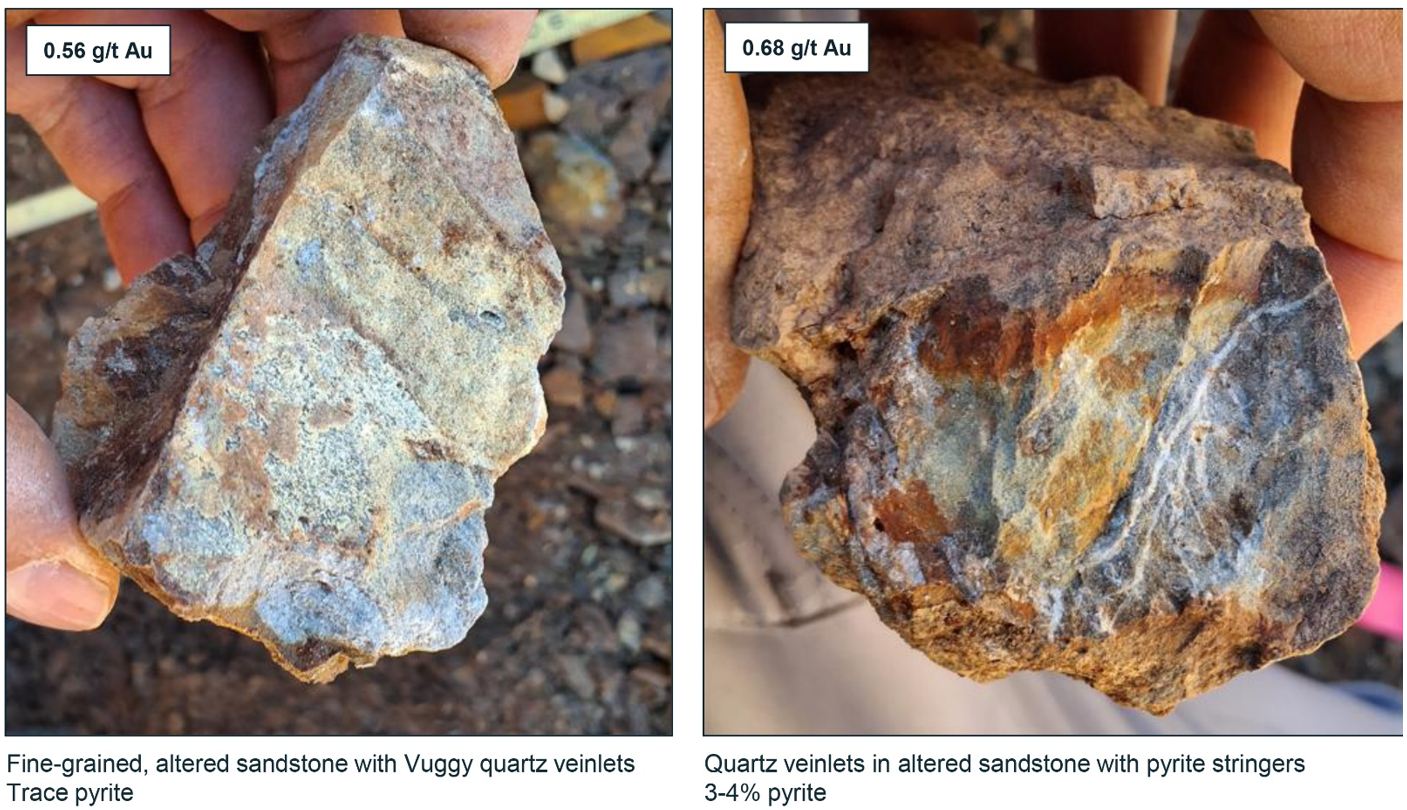
Image 1. Typical mineralization and gold grades of the Grog gold zone
To view an enhanced version of this graphic, please visit:
https://images.newsfilecorp.com/files/3398/324340_image1.jpg
Gold anomalies associated with arsenic, antimony, mercury, and thallium are consistent with a pathfinder suite in sediment-hosted disseminated Carlin-type gold systems. This association at Grog provides a basis for investigating the relationships between geochemical anomalies, host rocks, alteration, and mineralized structures. Further geological and exploration work will be required to confirm whether a Carlin-type gold system is at play at Grog.
CARLIN-TYPE DEPOSITS
Carlin-type deposits are sediment-hosted disseminated gold deposits. They are characterized by invisible (typically microscopic and/or dissolved) gold in pyrite. They often form from low-temperature, low-salinity fluids that interact with carbonate host rocks. These gold deposits are enriched in arsenic, antimony, mercury, thallium and barium. The deposit is named after the Carlin mine, the first large deposit of this type discovered in the Carlin Trend, Nevada.
ONGOING WORK AT GROG
Previous trenching and structural mapping indicate that gold mineralization is associated with NW-oriented late brittle faults and quartz veining. Puma is using new magnetic data, LiDAR interpretation, and its 2026 field observations to identify additional structures and to prioritize trench locations ahead of a future drilling program. The current pits will also be extended to better evaluate the strike potential of the mineralized system. Previous operators reported drill intersections of 0.45 g/t Au over 31.05 m, 0.32 g/t Au over 42.25 m, and 0.37 g/t Au over 13.00 m.
ON-SITE QUALITY ASSURANCE/QUALITY CONTROL (QA/QC) MEASURES
All rock samples were collected by Puma's field team, placed in individual bags, and securely sealed before being shipped to MSALABS (Val d'Or, Quebec) for analysis. Samples were processed using the PhotonAssay™ technology, an industry-leading method that provides accurate and rapid gold determinations on unpulverized samples.
Puma follows a rigorous QA/QC protocol that includes the systematic insertion of certified reference materials and blanks in every batch of samples submitted for analysis. The results from these control samples are routinely reviewed to ensure the reliability and accuracy of the analytical data.
QUALIFIED PERSON
The scientific and technical content of this press release has been prepared, reviewed, and approved by Dominique Gagné, P.Geo., Vice President of Exploration, who is a Qualified Person as defined by National Instrument 43-101 - Standards of Disclosure for Mineral Projects.
ABOUT THE MCKENZIE GOLD PROJECT
Puma's 42,053 ha McKenzie Gold Project is easily accessible via paved highways and gravel roads. It lies just 7 km west of the Company's Williams Brook Project, which is optioned to Kinross Gold Corp. The project straddles the McKenzie Fault, a prominent regional structure associated with numerous occurrences of high-grade gold quartz veins, stockworks and breccias. Puma has confirmed two significant gold systems at McKenzie: the RIM Gold Vein and the Grog Area, approximately 30 km apart, and has identified more than 75 surface targets across the large land package, demonstrating the project's district-scale potential. Puma's fully funded 2026 surface exploration program at McKenzie was launched in May, with two (2) field crews deployed full-time to advance exploration.
ABOUT PUMA EXPLORATION
Puma Exploration is a Canadian mineral exploration company focused on identifying and developing a pipeline of precious metals projects in New Brunswick, near Canada's renowned Bathurst Mining Camp.
Puma has a long history in northern New Brunswick and has developed a strong understanding of the region's geology and mineralized systems through a combination of traditional prospecting, trenching, geophysics, geochemistry and advanced exploration techniques.
Connect with us on Facebook, X, or LinkedIn.
Visit www.explorationpuma.com for more information or contact:
Marcel Robillard, President and CEO.
(418) 750-8510; president@explorationpuma.com
Mia Boiridy, Head of Investor Relations and Director.
(250) 575-3305; mboiridy@explorationpuma.com
Neither the TSX Venture Exchange nor its Regulation Services Provider (as that term is defined in the policies of the TSX Venture Exchange) accepts responsibility for the adequacy or accuracy of this release.
Forward-Looking Statements: This press release may contain forward-looking statements. Such forward-looking statements involve several known and unknown risks, uncertainties, and other factors that may cause the actual results, performance, or achievements of Puma to differ materially from those expressed or implied by such forward-looking statements. Readers are cautioned not to place undue reliance on these forward-looking statements, which speak only as of the date the statements were made, except as required by law. Puma undertakes no obligation to publicly update or revise any forward-looking statements. The quarterly and annual reports, as well as the documents submitted to the securities administration, describe these risks and uncertainties.

To view the source version of this press release, please visit https://www.newsfilecorp.com/release/324340